50 years design engineering anthropometry, an overview
IEA webinar: 16 July, 2026, at 15:00 UTC The Technical Committee on Anthropometry Webinar Series Duration: 60 mins, including time for discussion This presentation provides a retrospective overview of the evolution of anthropometry in design engineering over the past five decades. Beginning with the speaker’s experience learning traditional one-dimensional (1D) anthropometry from body dimension tables […]
What the Frontline Thinks About the Technology for MSD Prevention — and Why It Matters
IEA Webinar: June 8, 3 pm UTC The Technical Committee on Musculoskeletal Disorders Webinar Series Duration: 60 minutes, including time for discussion. As organizations accelerate the adoption of emerging technologies to prevent musculoskeletal disorders (MSDs), safety and operations leaders are often driving these investments. However, frontline worker perspectives—critical to adoption, sustained use, and measurable impact—are […]
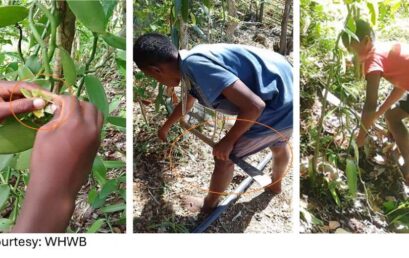
Assessing Physical Risks Of Young Workers In Agriculture: Special Groups Need Special Methods
IEA Webinar: 28 May 2026, 14:00 UTC Informal Work Webinar Series This webinar is organized by the IEA Informal Work Technical Committee in collaboration with Workplace Health Without Borders (WHWB). It draws on recent research in the vanilla supply chain in Madagascar where workers operate largely under informal arrangements. We will demonstrate how risk assessments […]
Quality Control of Anthropometric Data
IEA Webinar: 12th May (Tuesday), 2026, at 13.00 UTC/GMT (9.00 EDT); 22.00 JST This webinar is hosted by IEA The Technical Committee on Anthropometry Users of human body dimension data often assume that all measurements are obtained using comparable methods. Until the adoption of 3D body scanners in anthropometric surveys, measurement protocols were largely standardized […]
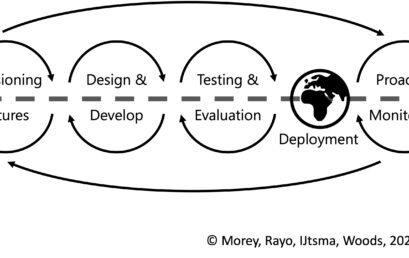
Anticipating the Effects of Artificial Intelligence (AI) on Resilient Performance
IEA Webinar: April 30th, 2026, at 15:00 CET Webinar series on Resilience Engineering This webinar will explore the intersection of Artificial Intelligence (AI) and Resilience Engineering (RE), showcasing how safety-critical industries are applying systems-based disciplines to guide the integration of AI into mission-critical functions. The webinar will highlight applications in healthcare, defense, and aviation, focusing […]
Advancing Construction Safety through AI and Computer Vision: Ergonomic Assessment and Real-Time Monitoring
IEA Webinar: 12th December 2025, 3 PM UTC (60 mins) Building and Construction Technical Committee Presenter Dr. SangHyun Lee, University of Michigan Speaker Bio: Dr. Lee is a Robert B. Harris Collegiate professor & John L. Tishman faculty scholar in Civil and Environmental Engineering, University of Michigan. He directs the Dynamic Project Management (DPM) Lab […]
Fighting Fatigue: Understanding Fatigue Risks in Healthcare and the Maritime Industry
Webinar: 11th December 2025 at 12:30 pm Europe/London timezone (Convert to my timezone) Joint Safety & Reliability Society (SaRS) and IEA Maritime HFE TC The London Branch of SaRS is delighted to announce a joint collaboration webinar between SaRS and the International Ergonomics Association (IEA) Maritime & Ergonomics Technical Committee examining the fatigue risks in healthcare […]
WMSDs in High-Risk Occupations: Cross-National Insights from Manufacturing, Construction, and Handicraft Industries in Asia
The Technical Committee on Musculoskeletal Disorders Webinar Series IEA Webinar: November 20th at 12:00 UTC https://www.timeanddate.com/worldclock/meeting.html Duration: 60 minutes. Work related musculoskeletal disorders (WMSDs) continue to be one of the most pressing occupational health challenges worldwide. Although WMSDs are a global concern, their prevalence, risk factors, and intervention strategies vary considerably across cultural and industrial […]
